A water softener does one job: it takes calcium and magnesium out of your water, the minerals behind scale and poor lather. Whether you should own one comes down to a tested hardness number, what it costs to run, and a few checks that can rule it out. Under 7 grains per gallon (gpg) you probably don’t need one. Above about 10.5 gpg it’s often worth pricing. It seldom pays for itself in money at any hardness, and it doesn’t make water safer to drink. The steps below follow the order we suggest reading in, so you can stop as soon as you have your answer.
This is general information, not medical or professional advice. Take well test results and any illness to your state or county health department or a certified lab, not to a seller.
Step 1: Get your number
Everything else depends on one reading. On city water, ask your utility for its hardness and whether it already softens the water. On a well, use a hardness test kit or a certified lab. Broader well testing comes first if you see stains or have safety worries. Treat a free dealer test as a sales step: Penn State Extension says an independent lab test “is not expensive and will protect you from being oversold.” To convert mg/L or ppm, divide by 17.1 or use our hardness converter.
| Grains per gallon | mg/L as calcium carbonate | Class | Do you need one? |
|---|---|---|---|
| Under 3.5 | Under 60 | Soft to slightly hard | No |
| 3.5 to 7 | 60 to 120 | Moderately hard | Usually not |
| 7 to 10.5 | 120 to 180 | Hard | Your call. Decide on the problems you actually have |
| Over 10.5 | Over 180 | Very hard | Often worth it, if nothing below rules it out |
None of these lines is a legal limit. EPA’s secondary standards have no entry for hardness, and EPA says hard water “is not a health concern.” Its guide says water above 120 mg/L “may benefit from softening” and that softeners are “often recommended” above 180 mg/L. For the sources and three example homes, read do I need a water softener.
Step 2: Check it’s the right problem
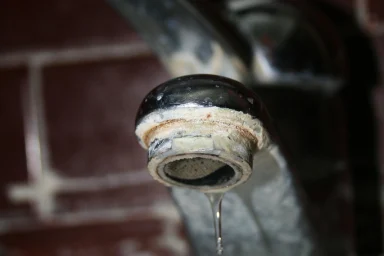
White crust on faucets, poor lather and soap scum point to hardness. Orange-brown or black stains point to iron or manganese. Blue-green stains and pinhole leaks may mean corrosive water, which a softener doesn’t treat and may add to.
A softener isn’t a purifier. Nebraska Extension says softening does not remove bacteria, hydrogen sulfide, silt or sand, lead, nitrate or pesticides.
- Taste, smell or grit. These point to a filter, and most filters leave hardness alone. Our softener vs filter guide matches each symptom to its fix and gives the plumbing order if you need both.
- Something in your drinking water. Under-sink reverse osmosis (RO) treats a few gallons a day at one tap, so your shower and water heater still get hard water. The makers’ manuals we read start calling for softened feed at about 10 gpg, and reverse osmosis vs a water softener explains when you need both, with the softener first.
On a well, Penn State generally recommends softeners for iron only with dissolved iron under 5 mg/L, pH above 6.7 and hardness of 3 to 20 gpg. Manufacturers’ limits vary, so see how to remove iron from well water before you buy.
Step 3: Softener or salt-free
A softener swaps calcium and magnesium for sodium or potassium, so the water tests soft. A salt-free conditioner leaves those minerals in place and tries to stop them forming scale, so the water still tests hard. Nebraska Extension calls these “descalant devices as opposed to hardness removing devices.” Sellers also use “conditioner” for ordinary salt softeners, so check the hardware, not the label. Our softener vs conditioner comparison shows how to read a quote.
The evidence for salt-free units is mixed. In one lab study, a template-assisted unit with new media cut heater scale by 89% to 97% over 21 days. In another lab, a media device, possibly of a different design, fell to about 5% to 12% on its second five-day run. We found no independent study showing these units deliver slick-feeling water, easy lather or cleaner glass. Iron, manganese, copper and phosphate can interfere with the media, and media wears out, so over 10 years a salt-free unit can cost more than a softener. Our salt-free softener guide covers the studies, makers’ limits and certification. For lather and fewer spots, choose a softener. If your only worry is heater scale and brine isn’t an option, salt-free can be a fair trade.
Step 4: Work out the real cost
Penn State puts softener hardware at about $500 to $1,500 before installation. Dealer systems run far higher: TapWaterData, a commercial site, shows medians of $5,500 and $5,750 from small samples of customer-reported quotes. A family of four using 300 gallons a day at 15 gpg, on a unit that just meets EPA’s efficiency marks, uses about 490 pounds of salt and 6,600 gallons of water a year.
The savings are smaller than sellers suggest. In one industry-funded lab study, electric tank heaters showed no change. By our arithmetic from it, hard water costs a gas tank heater about $30 a year at 15 gpg. One seller’s payback claim rests on about $1,560 a year in savings, some eight times the most we could document. In our three worked examples, soft water costs about $11 to $49 a month after those savings, so the real question is whether it’s worth that to you.
Health, home value and a promised payback are weak reasons. The best trial we found, of 336 children with moderate to severe eczema, found no added benefit from a softener. Are water softeners worth it shows the full sum and checks seller claims. To run your own numbers, use the softener cost calculator, then check a plumber’s quote against what installation covers. If you may move soon, compare with the rent or buy calculator.
Step 5: Check what could rule it out
- Local rules and septic. We found no state that bans softeners outright, but EPA’s guide warns that some local jurisdictions limit or prohibit them. Connecticut’s health department calls softener backwash to a septic system “specifically prohibited,” and California lets certain local agencies restrict new units that drain to a community sewer. The septic evidence is disputed, so ask your local health department first.
- Sodium. Salt softeners add about 8 mg/L of sodium per gpg removed, Nebraska says. At 15 gpg that’s about 120 mg/L, or 240 mg in 2 liters, about a tenth of the 2,300 mg Daily Value. EPA’s non-enforceable guidance level of 20 mg/L is for people limited to 500 mg a day. If anyone at home limits sodium, ask a doctor and consider an unsoftened tap for drinking and cooking. Potassium chloride is not automatically the healthier choice.
- Corrosion. Minnesota’s health department says softening can contribute to elevated lead and copper in drinking water, and that soft water from a utility needs no further softening.
- A tankless heater. One Rinnai manual lists a 200 mg/L hardness ceiling and says damage from water quality isn’t covered. Read yours.
Step 6: Size it, then feed it
Size from your tested hardness and real water use, not a dealer’s standard unit. A “42,000-grain” softener delivers that only at its highest salt setting: one Rheem model gives 29,900 grains on 8 pounds of salt and 42,400 on 16.3, so double the salt buys 42% more capacity. Our softener size calculator works from the capacity at the salt setting you choose.
EPA’s fact sheet and guide give the buying marks: demand-initiated regeneration, NSF/ANSI 44 certification, more than 3,350 grains per pound of salt, and 4 gallons of water or less per 1,000 grains. (The checklist in EPA’s guide says 5.)
For most units, the right fill is evaporated pellets or nuggets, at about $7 to $10 for a 40-pound bag in the listings we found. Check your manual first. Potassium chloride costs five to six times as much to run at the prices we found. Our softener salt guide has the yearly math and how to use less.
If the answer is no
Between 3.5 and 10.5 gpg, a smaller step may be enough. Connecticut suggests sequestering detergents in place of plain soap, and says calcium scale can be removed from heater elements by treatment and flushing. You can also soften only part of the house, such as hot water and boiler feed lines. Our hard water guides cover the problem itself.
Figures on this page come from the guides linked above, where each is cited to its source. Those guides were checked against primary sources on 2 November 2026. Worked examples are illustrative, and local quotes vary. WaterPlain has no lab and tested nothing here.